
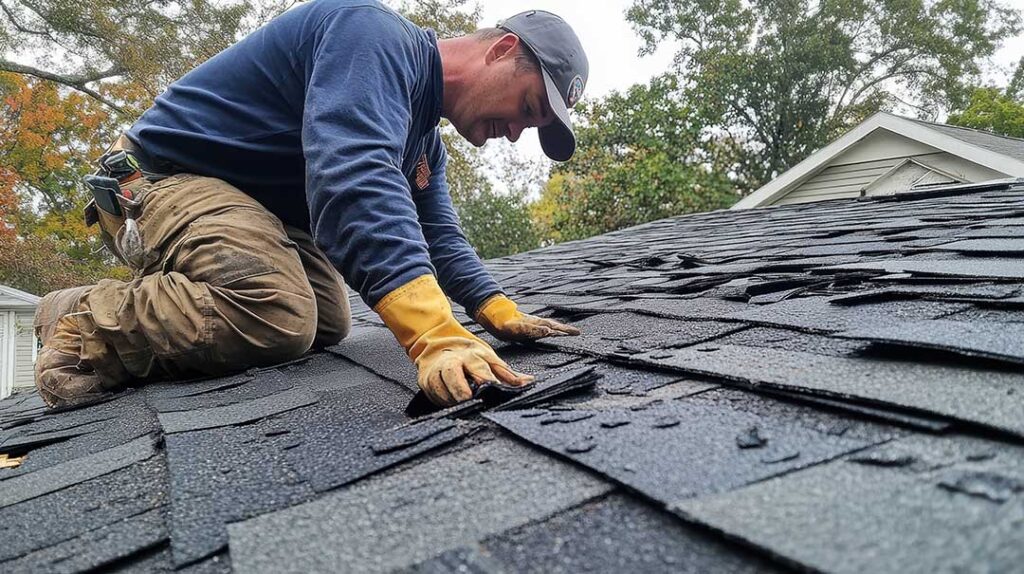
Dark streaks, brown patches, and greenish growth on a roof can look like simple dirt, but stains often reveal how moisture, shade, snow, and roofing materials are interacting. In Saranac Lake, NY, long winters, frequent freeze-thaw cycles, heavy precipitation, and shaded roof areas can make discoloration more noticeable and more persistent.
A roof stain does not always mean the roof is leaking. It may come from algae, moss, rust, chimney residue, trapped moisture, or aging materials. The first step is identifying the appearance and location of the stain before attempting to clean it.
What do common roof stains mean?
The color, shape, and position of a stain provide useful clues. A roof can have more than one problem at the same time, so visual inspection should include the roof surface, flashing, gutters, attic, and interior ceilings.
Black or dark gray streaks
Dark streaks running downward from the upper part of asphalt shingles are commonly associated with algae-related discoloration. These streaks are especially visible on lighter-colored roofing and tend to develop where the roof remains damp or receives limited sunlight.
Algae staining is usually cosmetic at first. However, persistent moisture around the roof surface can contribute to faster aging, particularly if the shingles are already brittle or losing their protective granules.
Green patches or thick vegetation
Green areas may indicate moss, lichen, or other plant growth. Moss is more likely to appear where leaves collect, branches shade the roof, or moisture remains after rain and snowmelt.
Moss can lift shingle edges as it grows underneath them. That creates pathways for water and increases the risk of wind damage. Pulling moss off by hand can remove granules or tear shingles, so aggressive scraping is not a safe solution.
Brown or yellow stains
Brown stains may come from rusting fasteners, metal flashing, chimney components, leaf debris, or water that has carried organic material across the roof. A brown mark directly below a penetration, such as a vent or chimney, deserves closer attention because it may be connected to a flashing problem.
If the same stain appears on an interior ceiling or attic surface, the possibility of water entry becomes more serious.
White or chalky marks
White marks can result from mineral deposits, weathered roofing granules, old cleaning residue, or water runoff from masonry and metal components. Some chalky areas are harmless surface deposits, while others may indicate that roofing materials are deteriorating.
A close inspection is more useful than judging the color alone. Look for exposed underlayment, missing granules, cracked sealant, or loose flashing near the affected area.
How can you tell whether a stain is caused by a leak?
A roof stain is more likely to be linked to a leak when it is localized around a roof penetration or accompanied by moisture inside the building. Warning signs include:
- A ceiling or wall stain that grows after rain
- Damp insulation in the attic
- Musty odors or visible mold-like growth indoors
- Water marks near skylights, vents, chimneys, or roof valleys
- Rust on nails, fasteners, or metal ductwork
- Dripping or dampness during snowmelt
- Peeling paint or damaged drywall near the upper walls or ceiling
Water does not always appear directly beneath the point where it enters. It can travel along rafters, roof decking, insulation, or framing before becoming visible indoors. For that reason, an interior stain may be several feet away from the actual roof defect.
In snowy conditions, leaks may become noticeable during thaw periods rather than during the heaviest snowfall. Ice buildup, blocked drainage paths, and repeated freezing and thawing can expose weaknesses that are difficult to see from the ground.
Can roof stains be cleaned safely?
Some roof stains can be treated, but cleaning methods matter. Asphalt shingles can be damaged by pressure washing, stiff brushing, or walking repeatedly across the surface. High-pressure water may remove protective granules and shorten the roof’s service life.
For minor algae discoloration, a roof-safe cleaning solution may be applied according to the product directions and allowed to work gradually. Rinsing should be gentle and directed downward so water does not enter beneath the shingles or behind flashing.
Avoid:
- Pressure washing
- Chlorine-heavy mixtures that can harm nearby plants or metal
- Mixing cleaning chemicals
- Scraping firmly across shingle surfaces
- Using a ladder or roof access point during wet, icy, or windy weather
- Walking on steep or visibly deteriorated roofing
Safety is a major concern. A roof may appear dry while still being slippery from algae, frost, moss, or fine moisture. Snow and ice around roof edges also create falling hazards for anyone below.
What about moss, lichen, and leaves?
Moss should not be treated like ordinary dirt. Its root-like structures can hold moisture against the roof and lift shingle edges. Lichen can attach firmly to the surface and may leave damaged areas behind if removed forcefully.
Leaves and small branches should be cleared when they collect in valleys, behind roof features, or along drainage paths. Organic debris holds moisture and can hide damaged shingles or flashing. It may also wash into gutters and contribute to overflow during rain or snowmelt.
Nearby trees do not automatically mean a roof needs major maintenance. The more relevant questions are whether branches touch the roof, whether shade prevents drying, and whether debris accumulates in the same areas repeatedly.
When does a stain indicate roof deterioration?
Discoloration becomes more concerning when it appears with physical damage. Signs of deterioration include:
- Curled, cracked, or missing shingles
- Bare patches where granules have worn away
- Soft or sagging roof decking
- Rusted or separated flashing
- Exposed fasteners
- Open seams around vents or other roof penetrations
- Repeated staining in the same location after cleaning
A roof that is near the end of its expected service life may develop stains because its surface is no longer shedding water as effectively. Cleaning can improve appearance but will not restore brittle shingles, failing flashing, or damaged decking.
How can staining be prevented?
Prevention begins with keeping the roof dry, draining properly, and allowing regular visual checks. Useful maintenance includes:
- Keeping gutters and downspouts clear of leaves and ice-related debris
- Trimming branches that contact or heavily shade the roof
- Removing accumulated leaves from valleys when conditions are safe
- Checking attic ventilation and insulation
- Watching for interior stains after major rain or spring thaw
- Inspecting flashing around chimneys, vents, and roof edges
- Avoiding unnecessary foot traffic on the shingles
Ventilation deserves special attention in cold climates. Warm, moist attic air can contribute to condensation and uneven roof temperatures. That moisture may resemble a leak or worsen existing roof problems. Proper airflow and insulation help reduce condensation, but attic conditions should be assessed carefully rather than guessed from exterior stains alone.
Should a stained roof be replaced?
A stain by itself usually does not justify roof replacement. Algae discoloration, light surface moss, or isolated runoff marks may be manageable if the roofing remains sound and there is no evidence of water entry.
Replacement becomes more likely when stains occur alongside widespread shingle loss, recurring leaks, soft decking, extensive moss damage, or advanced material aging. If the roof is unsafe to access, if water is entering living areas, or if structural damage is suspected, evaluation should be handled by someone qualified to work safely on roofing systems.
The most useful approach is to treat stains as clues. Identify the type of discoloration, look for nearby moisture or material damage, and consider how snow, shade, drainage, and seasonal weather affect the roof. That process helps separate a cosmetic problem from a condition that needs prompt attention.
