
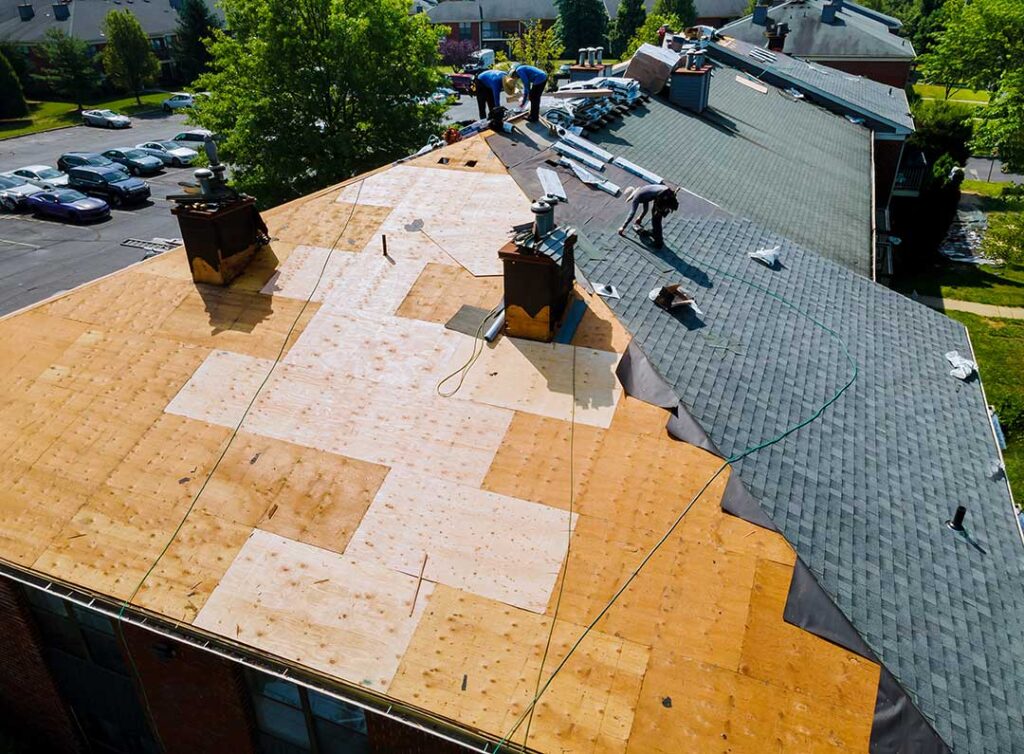
A roof tear-off is the complete removal of existing roofing materials before a new roof system is installed. It is more involved than placing new shingles over the old surface because the work exposes the roof deck, underlayment, flashing, ventilation, and any hidden damage.
For homeowners in Saranac Lake, NY, the process can also be affected by cold temperatures, snow, ice, steep rooflines, limited daylight, and the practical challenges of protecting a home during changing weather.
What happens before the tear-off begins?
Before removal starts, the work area should be evaluated and prepared. This usually includes checking the roof’s slope, identifying vulnerable areas, planning material handling, and deciding how debris will be contained.
The surrounding property may need protection from falling shingles, nails, dust, and small pieces of damaged wood. Common preparation steps include:
- Covering foundation plantings, outdoor furniture, and items near the walls
- Protecting windows, siding, doors, and exterior equipment
- Positioning tarps or collection equipment below the roof edges
- Identifying electrical lines, satellite equipment, vents, skylights, and other obstacles
- Planning access around driveways, walkways, porches, and attached structures
Inside the home, light vibration and noise are normal. Pictures, fragile objects, and loose items on upper floors may need to be secured. Homeowners should also expect temporary disruption around attic access points and the upper levels of the house.
How long does a roof tear-off take?
A straightforward tear-off may be completed in a day, but the total project often takes longer once inspection, repairs, weather delays, installation, and cleanup are included. Roof size, steepness, number of layers, access, and the condition of the roof deck all affect the schedule.
Weather is a particularly important factor in the Adirondack region. Snow, freezing rain, high winds, wet surfaces, and very low temperatures can make roof work unsafe or prevent roofing materials from performing properly. Even if removal begins as planned, a weather change may require the exposed section to be covered temporarily.
The most disruptive portion is usually the removal itself. It involves repeated movement across the roof, dropping old materials, and loading debris. A tear-off is not a quiet process, so households may want to plan around children, pets, remote work, naps, or other activities that require a calm environment.
What materials are removed?
A typical tear-off may include several layers rather than only the visible shingles. Depending on the roof’s history, the removal may involve:
- Asphalt shingles or another roof covering
- Ridge caps and hip caps
- Underlayment or roofing felt
- Ice-barrier material
- Old flashing around chimneys, walls, skylights, and roof penetrations
- Drip-edge metal
- Damaged or outdated ventilation components
- Exposed nails and fasteners
In some homes, more than one layer of roofing has been installed over time. Additional layers increase the weight, labor, debris volume, and possibility of concealed damage.
Older homes may also have roof details that differ from modern construction. Irregular roof shapes, additions, enclosed porches, dormers, and older flashing methods can make the removal process less predictable.
What happens when the roof deck is exposed?
The roof deck is the structural surface beneath the roofing materials. Once the shingles and underlayment are removed, its condition can be inspected directly.
Some deterioration is easy to see, such as dark staining, delamination, soft plywood, holes, or sections weakened by long-term moisture. Other problems may be concentrated around chimneys, valleys, eaves, plumbing vents, and areas where snow or ice repeatedly collects.
Roof-deck repairs may be needed if the wood is:
- Soft or spongy underfoot
- Split, swollen, or badly warped
- Decayed around a roof penetration
- Separating into layers
- Unable to hold roofing fasteners securely
Not every stain means the roof deck must be replaced. Discoloration may reflect an old leak that has already been corrected. The condition of the wood, not its appearance alone, determines whether repair is necessary.
A roof tear-off can therefore reveal costs and work that were not visible during an exterior inspection. This is one reason a final scope of work may change after removal begins.
How are the home and roof protected overnight?
If the roof cannot be completed in one day, the exposed area should be covered with weather-resistant protection. Temporary coverings help reduce the chance of rain, melting snow, wind-driven moisture, and overnight condensation entering the building.
However, a temporary covering is not a substitute for a finished roof. Strong wind, heavy precipitation, or ice can create additional risk if the exposed area is large or the covering is not properly secured.
Homeowners should ask how the roof will be protected if weather interrupts the work, especially during spring and fall periods when conditions can change quickly. A clear plan should account for the roof’s size, the expected weather, and the possibility that damaged decking may extend the project.

What should homeowners expect inside the house?
Most of the work happens outside, but a tear-off can be noticeable indoors. Vibrations may cause small amounts of dust or loosen minor debris in an attic, particularly around older ceiling finishes.
It is reasonable to expect:
- Loud impact and scraping sounds
- Vibration in upper rooms
- Brief movement of ceiling fixtures or wall decorations
- Dust near attic access points
- Occasional odors from old roofing materials or treated wood
A roof tear-off should not normally cause interior water damage. If water appears inside during the project, it should be reported immediately so the exposed area and temporary protection can be checked.
How is roofing debris handled?
Old shingles, nails, underlayment, wood, metal, and miscellaneous roofing waste are separated or collected as the tear-off progresses. Small nails can travel farther than expected, especially around driveways, lawns, decks, and walkways.
Thorough cleanup generally includes ground-level inspection, sweeping or magnetic collection, removal of protective coverings, and checking areas where debris may have fallen beneath shrubs or along foundation edges.
Residents should keep vehicles, children, and pets away from the active work zone. Pets can step on sharp debris or become distressed by the noise, while children may be attracted to piles of old roofing materials.
What makes roof tear-offs different in cold, snowy conditions?
Cold-weather roof work requires extra planning. Snow and ice must be removed from the work area, and slippery surfaces can make roof access hazardous. Some roofing materials also become less flexible in low temperatures, which can affect handling and installation.
Snow guards, ice dams, heavy snow loads, and repeated freeze-thaw cycles may reveal weaknesses around eaves, valleys, and roof penetrations. In homes with limited attic insulation or ventilation, moisture can also contribute to staining, frost, and long-term wood deterioration.
A tear-off may be easier to manage during a stable weather window, but waiting for ideal conditions is not always possible if the existing roof is actively leaking or structurally compromised. The central concern is maintaining a dry, secure building throughout the work.
What questions should be answered before work starts?
A homeowner should understand the basic plan before the first shingle is removed. Useful questions include:
- How many roofing layers are expected?
- How will landscaping, siding, windows, and walkways be protected?
- What happens if damaged roof decking is found?
- How will the roof be covered if weather causes a delay?
- How will nails and debris be collected?
- Which roof features, such as flashing and vents, will be removed or replaced?
- How will attic or interior concerns be documented if they are discovered?
A roof tear-off is disruptive, but it also provides the clearest opportunity to inspect the roof structure and correct hidden problems. Knowing what the process involves helps households prepare for noise, debris, weather changes, and the possibility of repairs that could not be seen before the old roofing was removed.
